Toast Brewing
Cult brand strategy
Toast Brewing was making beer from surplus bread in a food waste mission that was good for the planet.
But rate of sale was falling.
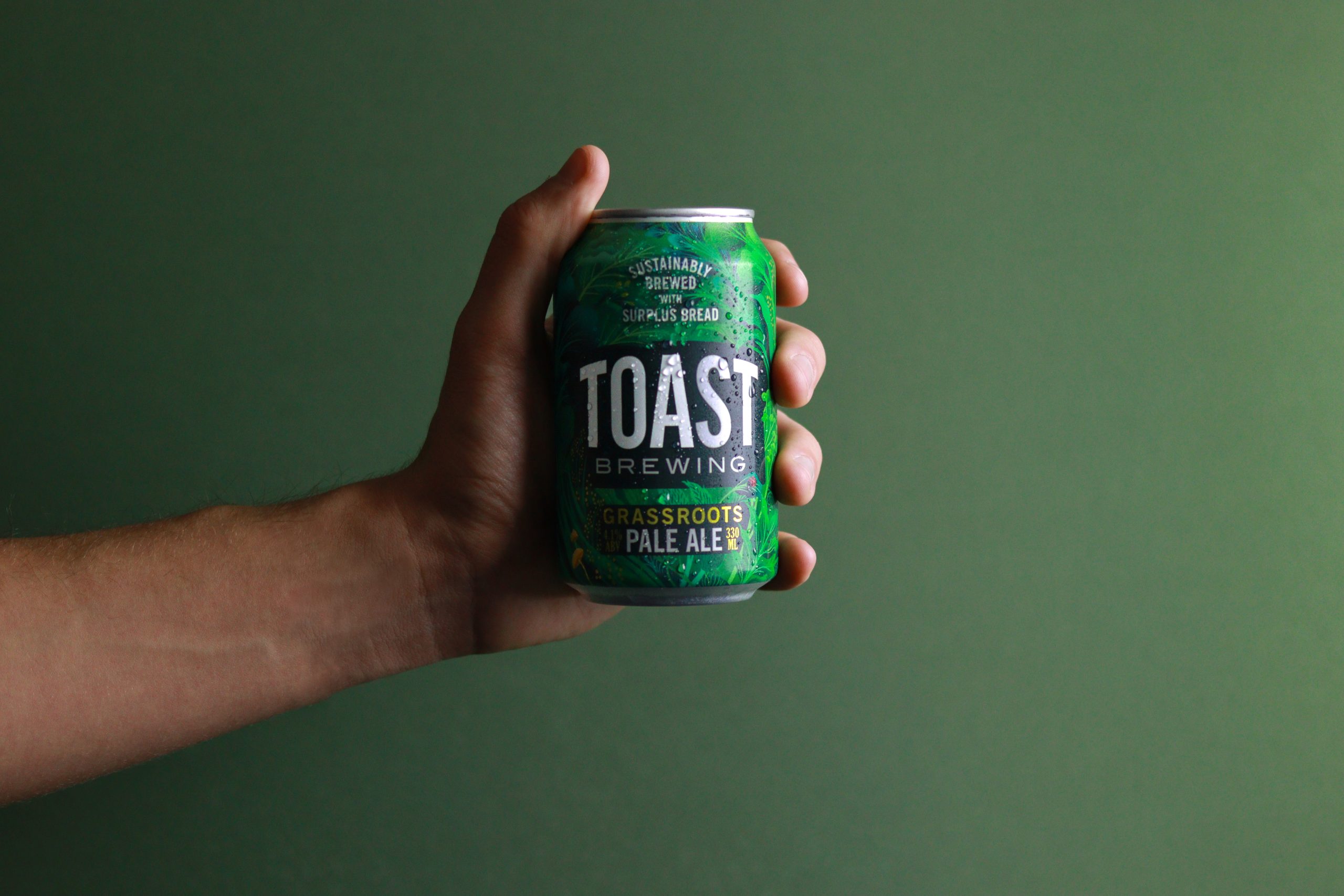
Toast had recently rebranded. The new cans were genuinely beautiful - richly illustrated, nature-led, every surface carrying the ecological story of food waste and regeneration.
The kind of work that wins awards and makes a brand team proud.
It also required time and attention to decode. And in a supermarket beer aisle, customers are on autopilot. They don't have time and attention to give.
The previous identity - bold, colour-blocked, ruthlessly legible - had been doing something the new one wasn't. It could be identified at distance. It worked as a shelf cue. It was a functioning distinctive asset.
The rebrand sacrificed recognisability for beauty, and in a category where recognition precedes desire, that trade-off was costing rate of sale and two major retail listings were under threat.
Underneath all of it was a structural problem the rebrand had accelerated: Toast was spending money trying to convince a broad, cost-of-living-squeezed audience to pay 60% more than on-shelf competitors for a beer on ethical grounds. And at the moment of purchase, ethics doesn't win.
They brought us in to fix it.
But rate of sale was falling.
Toast had recently rebranded. The new cans were genuinely beautiful - richly illustrated, nature-led, every surface carrying the ecological story of food waste and regeneration.
The kind of work that wins awards and makes a brand team proud.
It also required time and attention to decode. And in a supermarket beer aisle, customers are on autopilot. They don't have time and attention to give.
The previous identity - bold, colour-blocked, ruthlessly legible - had been doing something the new one wasn't. It could be identified at distance. It worked as a shelf cue. It was a functioning distinctive asset.
The rebrand sacrificed recognisability for beauty, and in a category where recognition precedes desire, that trade-off was costing rate of sale and two major retail listings were under threat.
Underneath all of it was a structural problem the rebrand had accelerated: Toast was spending money trying to convince a broad, cost-of-living-squeezed audience to pay 60% more than on-shelf competitors for a beer on ethical grounds. And at the moment of purchase, ethics doesn't win.
They brought us in to fix it.
-
ClientToast Brewing
-
Year2023
-
Results67% Increase in Revenue
Cult
Potential
Sustainability is a post-rationalisation trigger, not a primary sales driver.
Consumers say they care about ethics and the environment. At the moment of purchase, other factors - price, design, immediate desirability - take priority.
This is the attitude-behaviour gap, and it punishes purpose-led brands that lead with their mission rather than their product.
Toast had a compelling sustainability story, a premium design, and beer that was roughly 60% more expensive than its on-shelf competitors.
Sustainability alone is not enough to justify the price premium. The brand was asking customers to think when they should have been making them feel.
The real challenge wasn't the product. It was the positioning. Toast had cult potential sitting untapped in its bones - a compelling food waste story and a visually rich identity. None of it was being deployed in a way that made the brand desirable first.
Consumers say they care about ethics and the environment. At the moment of purchase, other factors - price, design, immediate desirability - take priority.
This is the attitude-behaviour gap, and it punishes purpose-led brands that lead with their mission rather than their product.
Toast had a compelling sustainability story, a premium design, and beer that was roughly 60% more expensive than its on-shelf competitors.
Sustainability alone is not enough to justify the price premium. The brand was asking customers to think when they should have been making them feel.
The real challenge wasn't the product. It was the positioning. Toast had cult potential sitting untapped in its bones - a compelling food waste story and a visually rich identity. None of it was being deployed in a way that made the brand desirable first.
01. Identity Gap
Toast had built a brand for people who agreed with them. The ethical beer drinker. The conscious consumer. The sustainability-motivated shopper willing to pay more because they should.
The 'barstool activist' - a broad, values-led target that looked compelling in a strategy deck and performed poorly in a supermarket aisle.
When a brand positions itself around shared values rather than shared identity, it attracts occasional, ethically-motivated buyers - people who choose Toast when they're thinking about it, and default to habit when they're not.
That's not a tribe. That's a leaky bucket with a mission statement on the side.
The shift was to close the gap between what Toast stood for and what its best customer actually wanted to feel when they cracked one open. Not virtuous. Discerning.
The Toast customer is in his early forties. ABC1. Past the years of financial chaos - mortgage in place, kids in school, a little breathing room at last.
He drinks beer weekly. He cares, in a general sense, about the world his children are inheriting. But he doesn't think of himself primarily as an environmentalist. He thinks of himself as someone with taste. Someone who's earned the right to drink well. Someone who makes considered choices - in what he drives, what he eats, what he wears - without needing those choices to announce themselves.
The brand he wants in his hand is one that says "I know what's good", not one that says "I know what's right."
Toast was saying the wrong thing to the right person. Every piece of sustainability-forward messaging asked him to identify primarily as a conscious consumer - to wear the ethics on the outside, to make the purchase a statement. And for a man who'd already made his peace with caring about the world quietly, being asked to perform that caring at the point of purchase felt like a mismatch.
He didn't want to raise a toast to the planet. He wanted to raise a toast. Full stop.
The cult potential was in closing that gap - moving the brand from a product he agreed with to a beer he identified with. Not the ethical choice. His choice.
The 'barstool activist' - a broad, values-led target that looked compelling in a strategy deck and performed poorly in a supermarket aisle.
When a brand positions itself around shared values rather than shared identity, it attracts occasional, ethically-motivated buyers - people who choose Toast when they're thinking about it, and default to habit when they're not.
That's not a tribe. That's a leaky bucket with a mission statement on the side.
The shift was to close the gap between what Toast stood for and what its best customer actually wanted to feel when they cracked one open. Not virtuous. Discerning.
The Toast customer is in his early forties. ABC1. Past the years of financial chaos - mortgage in place, kids in school, a little breathing room at last.
He drinks beer weekly. He cares, in a general sense, about the world his children are inheriting. But he doesn't think of himself primarily as an environmentalist. He thinks of himself as someone with taste. Someone who's earned the right to drink well. Someone who makes considered choices - in what he drives, what he eats, what he wears - without needing those choices to announce themselves.
The brand he wants in his hand is one that says "I know what's good", not one that says "I know what's right."
Toast was saying the wrong thing to the right person. Every piece of sustainability-forward messaging asked him to identify primarily as a conscious consumer - to wear the ethics on the outside, to make the purchase a statement. And for a man who'd already made his peace with caring about the world quietly, being asked to perform that caring at the point of purchase felt like a mismatch.
He didn't want to raise a toast to the planet. He wanted to raise a toast. Full stop.
The cult potential was in closing that gap - moving the brand from a product he agreed with to a beer he identified with. Not the ethical choice. His choice.
02. The neo-tribes
The obvious target for a sustainable beer brand is the eco-conscious consumer.
That tribe is real. It's also small, increasingly crowded with competitors making similar ethical claims, and disproportionately concentrated in London - where housing costs meant the cost of living crisis hit hardest, and premium discretionary spending was the first thing to go.
The tribes we found for Toast were different.
Detailed demographic and disposable income modelling identified a specific customer who could actually afford to buy Toast as a weekly purchase and sustain that habit: ABC1 households, aged 39 and over, with school-age children and the childcare costs behind them. Minimum household income of £4,326 after tax per month. Primarily shopping in Waitrose and Co-op. The man is drinking it. The woman is buying it.
That last detail is commercially critical and almost universally ignored in beer marketing. Beer is statistically drunk by men but purchased in the supermarket by women, who are responsible for grocery shopping in the majority of UK households.
When she gets to the store, she is sleep-shopping - making purchasing decisions out of habit. If Toast isn't his named brand of choice before she leaves the house, she will default to whatever she usually buys.
To overcome this, Toast needed to build desire and brand recall with the man, so that he made a named request. And it needed to be visible and desirable enough at the fixture to trigger that recall when she arrived in the aisle. Two audiences. One brand.
And a creative strategy that had to work on both.
That tribe is real. It's also small, increasingly crowded with competitors making similar ethical claims, and disproportionately concentrated in London - where housing costs meant the cost of living crisis hit hardest, and premium discretionary spending was the first thing to go.
The tribes we found for Toast were different.
Detailed demographic and disposable income modelling identified a specific customer who could actually afford to buy Toast as a weekly purchase and sustain that habit: ABC1 households, aged 39 and over, with school-age children and the childcare costs behind them. Minimum household income of £4,326 after tax per month. Primarily shopping in Waitrose and Co-op. The man is drinking it. The woman is buying it.
That last detail is commercially critical and almost universally ignored in beer marketing. Beer is statistically drunk by men but purchased in the supermarket by women, who are responsible for grocery shopping in the majority of UK households.
When she gets to the store, she is sleep-shopping - making purchasing decisions out of habit. If Toast isn't his named brand of choice before she leaves the house, she will default to whatever she usually buys.
To overcome this, Toast needed to build desire and brand recall with the man, so that he made a named request. And it needed to be visible and desirable enough at the fixture to trigger that recall when she arrived in the aisle. Two audiences. One brand.
And a creative strategy that had to work on both.
03. The real enemy
Toast's real competitor wasn't Beavertow, or Brewdog.
It was habit.
Research into supermarket shopping behaviour shows that by the time a customer reaches the beer aisle, the decision has already been made. They're sleep-shopping - moving through the store on autopilot, reaching for the brand that's already in their head. If Toast wasn't in that head before they walked through the door, the shelf presence didn't matter.
Sainsbury's once dressed a man in a gorilla suit and walked him through one of their stores on a Saturday morning. Shoppers didn't notice. They were too deep in routine to look up. The lesson: you can't win at the fixture if you haven't already won in the mind.
For Toast, this meant the marketing problem wasn't awareness in the abstract. It was named-brand preference - building enough desire and recall with the right audience that "get some Toast" became a household phrase rather than a happy accident at the shelf.
Sustainability messaging couldn't do that.
It asks System 2 - the slow, deliberate, rational brain - to intervene in a decision that System 1 has already made. Premium desire, on the other hand, is System 1 territory.
You don't think your way into wanting something beautiful. You feel it.
It was habit.
Research into supermarket shopping behaviour shows that by the time a customer reaches the beer aisle, the decision has already been made. They're sleep-shopping - moving through the store on autopilot, reaching for the brand that's already in their head. If Toast wasn't in that head before they walked through the door, the shelf presence didn't matter.
Sainsbury's once dressed a man in a gorilla suit and walked him through one of their stores on a Saturday morning. Shoppers didn't notice. They were too deep in routine to look up. The lesson: you can't win at the fixture if you haven't already won in the mind.
For Toast, this meant the marketing problem wasn't awareness in the abstract. It was named-brand preference - building enough desire and recall with the right audience that "get some Toast" became a household phrase rather than a happy accident at the shelf.
Sustainability messaging couldn't do that.
It asks System 2 - the slow, deliberate, rational brain - to intervene in a decision that System 1 has already made. Premium desire, on the other hand, is System 1 territory.
You don't think your way into wanting something beautiful. You feel it.
04. brand world
We built two creative directions were built around the existing identity. The first was high-end editorial - cans placed in immersive natural environments: ocean waves hitting a beach at sunset, wild berries, coastal light, gorse in flower.
This was a priming strategy. A beer seen in nature feels connected to nature without requiring explanation. The sustainability story was told before any text was needed, and the brand registered as premium, not preachy.
The second was minimal and masculine - clean studio shots, dark backgrounds, the bread origin story brought back to the foreground. Bread rolls beside the bottle.
The glass, the pour, the product as the unambiguous hero.
This was the conversion layer: desire stripped back to its essentials, the product doing the work.
The two registers worked together through the funnel. Editorial at the top, to build emotional desirability and brand salience. Product-led at the bottom, to drive recall and purchase. The sustainability story ran underneath both - present, credible, never in the way.
Heatmap testing validated the approach: in image-only ads, the brand logo had a 51.7% chance of being noticed. In text-heavy ads, that dropped to 23.4%.
This was a priming strategy. A beer seen in nature feels connected to nature without requiring explanation. The sustainability story was told before any text was needed, and the brand registered as premium, not preachy.
The second was minimal and masculine - clean studio shots, dark backgrounds, the bread origin story brought back to the foreground. Bread rolls beside the bottle.
The glass, the pour, the product as the unambiguous hero.
This was the conversion layer: desire stripped back to its essentials, the product doing the work.
The two registers worked together through the funnel. Editorial at the top, to build emotional desirability and brand salience. Product-led at the bottom, to drive recall and purchase. The sustainability story ran underneath both - present, credible, never in the way.
Heatmap testing validated the approach: in image-only ads, the brand logo had a 51.7% chance of being noticed. In text-heavy ads, that dropped to 23.4%.
05. becoming a habit
"Liquid on lips" - the first taste in a pub or bar - is the essential conversion moment. A customer who tries Toast on draught and likes it is primed for off-trade purchase.
But only if the brand is already visible enough in the off-trade to trigger recall when they're standing in Waitrose the following Saturday.
This meant aligning on-trade activation - pub listings, trial moments, draught presence - with the precise geographic and demographic locations of the retail stockists.
Toast already had strong distribution. The opportunity was to make that distribution work harder by ensuring the trial pipeline and the purchase pipeline were pointing at the same people, in the same places, at the same time.
The repeat purchase target was to double the rate from 10% to 20%. Getting a customer to buy Toast once is awareness. Getting them to ask for it by name the following week is the only metric that matters.
But only if the brand is already visible enough in the off-trade to trigger recall when they're standing in Waitrose the following Saturday.
This meant aligning on-trade activation - pub listings, trial moments, draught presence - with the precise geographic and demographic locations of the retail stockists.
Toast already had strong distribution. The opportunity was to make that distribution work harder by ensuring the trial pipeline and the purchase pipeline were pointing at the same people, in the same places, at the same time.
The repeat purchase target was to double the rate from 10% to 20%. Getting a customer to buy Toast once is awareness. Getting them to ask for it by name the following week is the only metric that matters.
06. Cult activation
Our work covered creative direction, brand strategy, audience targeting, email marketing and paid media - building the commercial, communications and visual system that made the brand desirable before it made the case for itself.
Our editorial photography campaign placed Toast in the wild British environments the brand's identity was already reaching for: dawn beaches, coastal light, hedgerow berries, open fields. The sustainability story embedded itself in setting and atmosphere rather than copy. Premium-level composition and lighting made the product feel like a considered choice, not a compromise.
Alongside it, our studio campaign stripped everything back - the bread origin story returned as a tactile, honest presence. Rolls beside the can. The product against darkness. Beauty without decoration.
Meta ad testing structured the campaign by funnel stage: editorial imagery at the top to build desire and salience, product-focused imagery at the mid and lower funnel to drive recall and conversion. Delivered at a 650% ROAS.
The result was a brand that felt good before it explained itself - which is the only condition under which sustainability ever lands as premium rather than preachy.
Our editorial photography campaign placed Toast in the wild British environments the brand's identity was already reaching for: dawn beaches, coastal light, hedgerow berries, open fields. The sustainability story embedded itself in setting and atmosphere rather than copy. Premium-level composition and lighting made the product feel like a considered choice, not a compromise.
Alongside it, our studio campaign stripped everything back - the bread origin story returned as a tactile, honest presence. Rolls beside the can. The product against darkness. Beauty without decoration.
Meta ad testing structured the campaign by funnel stage: editorial imagery at the top to build desire and salience, product-focused imagery at the mid and lower funnel to drive recall and conversion. Delivered at a 650% ROAS.
The result was a brand that felt good before it explained itself - which is the only condition under which sustainability ever lands as premium rather than preachy.
+67% increase in D2C revenue.
+35.71% increase in placed order rate from email marketing.
650% ROAS on digital advertising.
The campaign was featured in Waitrose magazine. Toast Brewing was perceived not just as an eco-friendly beer, but as a high-quality product worthy of a price premium. Ethics don't sell. Desire does.
Sustainability is a trust signal, not the hook that drives impulse. When customers feel something, they buy. The work made them feel it.
+35.71% increase in placed order rate from email marketing.
650% ROAS on digital advertising.
The campaign was featured in Waitrose magazine. Toast Brewing was perceived not just as an eco-friendly beer, but as a high-quality product worthy of a price premium. Ethics don't sell. Desire does.
Sustainability is a trust signal, not the hook that drives impulse. When customers feel something, they buy. The work made them feel it.