Owens Coffee
full
cult rebrand
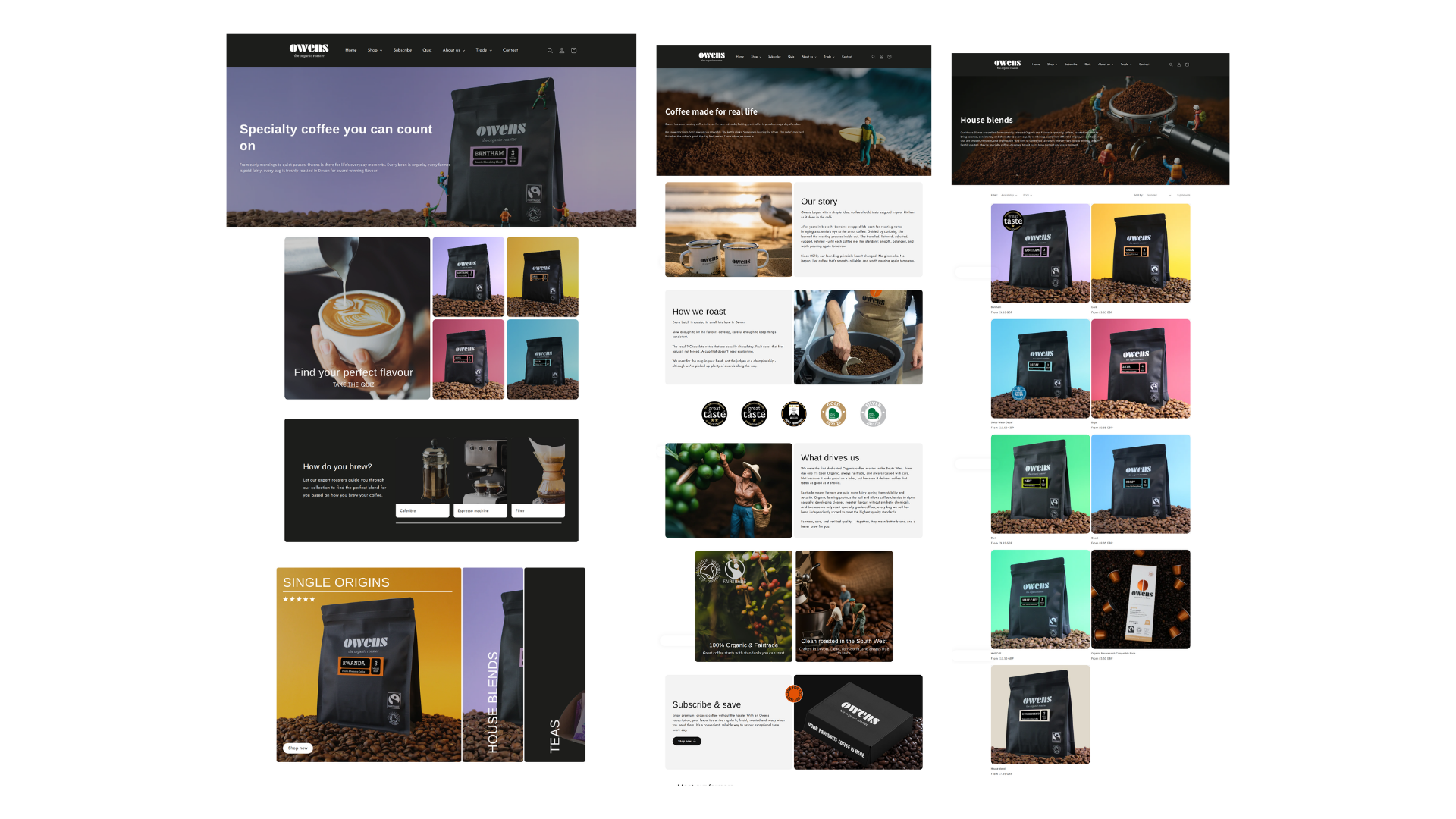
We transformed Owens Coffee from a replaceable specialty product into a high-performing cult brand - redesigning everything from pricing and margins to packaging, website, and creative direction.
By building a behavioural growth system focused on identity, habit and retention, we turned a fragile acquisition model into a compounding subscription engine.
We led a full rebrand, new packaging design and creative direction, creating a distinctive brand world designed to cut through a crowded category and make Owens instantly recognisable and harder to replace.
The result: +31% revenue growth, +50% subscription revenue, £8.10 return for every £1 invested, and industry-leading loyalty with a combined NPS of +75. Paid media returning 5.9x ROAS, with growth driven by a cult brand customers don’t want to leave.
By building a behavioural growth system focused on identity, habit and retention, we turned a fragile acquisition model into a compounding subscription engine.
We led a full rebrand, new packaging design and creative direction, creating a distinctive brand world designed to cut through a crowded category and make Owens instantly recognisable and harder to replace.
The result: +31% revenue growth, +50% subscription revenue, £8.10 return for every £1 invested, and industry-leading loyalty with a combined NPS of +75. Paid media returning 5.9x ROAS, with growth driven by a cult brand customers don’t want to leave.
-
ClientOwens Coffee
-
Year2025
-
Result31% Growth
-
Website
cult
potential
Specialty coffee has a switching problem.
Owens Coffee had good coffee. Loyal customers. A functioning subscription model. No real reason to leave, and no real reason to stay.
In specialty coffee, replaceability is endemic. The category is structurally designed for novelty. Roasters release new single origins monthly. Comparison is built into the experience. "Try something new" is a category norm.
The result is a category-wide paid acquisition trap. When switching is the norm, retention weakens and growth becomes dependent on continually buying new customers. Brands are forced to spend more just to stand still, eroding margin and delaying profitability. In this environment, even strong brands struggle to scale because they lack stickiness.
Owens Coffee had good coffee. Loyal customers. A functioning subscription model. No real reason to leave, and no real reason to stay.
In specialty coffee, replaceability is endemic. The category is structurally designed for novelty. Roasters release new single origins monthly. Comparison is built into the experience. "Try something new" is a category norm.
The result is a category-wide paid acquisition trap. When switching is the norm, retention weakens and growth becomes dependent on continually buying new customers. Brands are forced to spend more just to stand still, eroding margin and delaying profitability. In this environment, even strong brands struggle to scale because they lack stickiness.
01.
identity gap
When a brand becomes part of how customers think about their identity, switching feels faintly disloyal. Not to the brand, but to themselves.
Owens' customers buy a signal about the kind of person they are: someone who cares about craft, who has standards, who has taste - but isn’t pretentious about it.
The quiz established that identity at the point of first purchase. The ritual architecture deepened it over time. And once identity is in play, the brand stops competing on product and starts competing on self-concept.
That's where irreplaceability lives. In the gap between "a coffee brand I like" and my coffee brand. Customers who've crossed that line aren't comparison-shopping. They're not looking at alternatives. They're paying more, subscribing automatically, and staying subscribed - in this case for 19 months compared to a 3-6 month industry average.
Owens' customers buy a signal about the kind of person they are: someone who cares about craft, who has standards, who has taste - but isn’t pretentious about it.
The quiz established that identity at the point of first purchase. The ritual architecture deepened it over time. And once identity is in play, the brand stops competing on product and starts competing on self-concept.
That's where irreplaceability lives. In the gap between "a coffee brand I like" and my coffee brand. Customers who've crossed that line aren't comparison-shopping. They're not looking at alternatives. They're paying more, subscribing automatically, and staying subscribed - in this case for 19 months compared to a 3-6 month industry average.
02.
the neo-tribes
The obvious tribe for a specialty coffee brand is the specialty coffee drinker.
The person who knows their processing methods, follows roasters on Instagram, and has an opinion about grind size. The person the category has always marketed to.
That’s a small, promiscuous group - actively rewarded, by the culture of the category itself, for switching and exploring. And it's a group that's already being served, aggressively, by every other player in the market.
The tribes we found for Owens weren't those people.
They were comprised of the 62% of Owens' own customer base aged 35 and over. People with the financial stability to sustain a long-term subscription. People who know quality when they taste it but don't particularly want to learn the vocabulary. People who have been quietly intimidated out of specialty coffee by a category that talks upwards - to connoisseurs - rather than sideways.
These are the mid-market coffee drinkers nobody else is speaking to, because the category, through decades of enthusiast positioning, had made them feel like they weren't welcome.
The defining characteristic of these tribes aren't what they know about coffee. It's how they want to feel when they drink it.
Relaxed. Trusted. Treated like adults who have taste, without being made to prove it.
The person who knows their processing methods, follows roasters on Instagram, and has an opinion about grind size. The person the category has always marketed to.
That’s a small, promiscuous group - actively rewarded, by the culture of the category itself, for switching and exploring. And it's a group that's already being served, aggressively, by every other player in the market.
The tribes we found for Owens weren't those people.
They were comprised of the 62% of Owens' own customer base aged 35 and over. People with the financial stability to sustain a long-term subscription. People who know quality when they taste it but don't particularly want to learn the vocabulary. People who have been quietly intimidated out of specialty coffee by a category that talks upwards - to connoisseurs - rather than sideways.
These are the mid-market coffee drinkers nobody else is speaking to, because the category, through decades of enthusiast positioning, had made them feel like they weren't welcome.
The defining characteristic of these tribes aren't what they know about coffee. It's how they want to feel when they drink it.
Relaxed. Trusted. Treated like adults who have taste, without being made to prove it.
03.
the real enemy
Owens, like most specialty coffee brands, was sabotaging retention at the very first moment of consideration.
They were dropping customers into product grids cluttered with tasting notes, roast levels, processing methods, provenance lore and acidity descriptors that required more cognitive labour than choosing a bottle of wine. The category is drenched in semiotic noise, and almost every D2C player seems to believe that more choice equals more sophistication.
We did the opposite.
A simple set of behavioural questions about how the customer actually lives and drinks coffee, to reframe the act of choosing as a moment of self-discovery.
The psychological shift took them from decoding roast charts to recognising patterns in their own habits. This turned a commodity comparison into an act of identity.
This approach delivers a 17% conversion rate from the quiz - over three times the industry average.
They were dropping customers into product grids cluttered with tasting notes, roast levels, processing methods, provenance lore and acidity descriptors that required more cognitive labour than choosing a bottle of wine. The category is drenched in semiotic noise, and almost every D2C player seems to believe that more choice equals more sophistication.
We did the opposite.
A simple set of behavioural questions about how the customer actually lives and drinks coffee, to reframe the act of choosing as a moment of self-discovery.
The psychological shift took them from decoding roast charts to recognising patterns in their own habits. This turned a commodity comparison into an act of identity.
This approach delivers a 17% conversion rate from the quiz - over three times the industry average.
04.
brand world
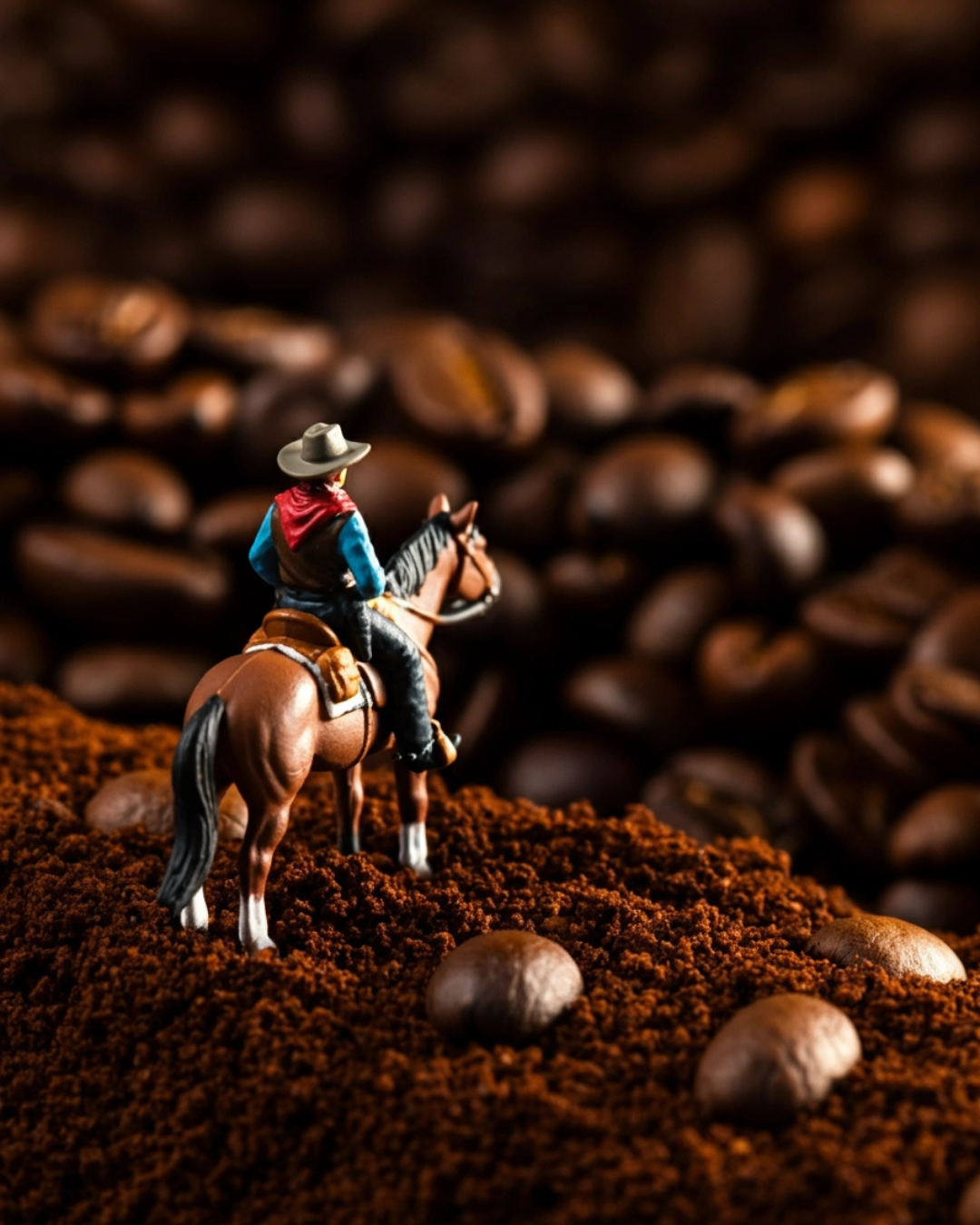
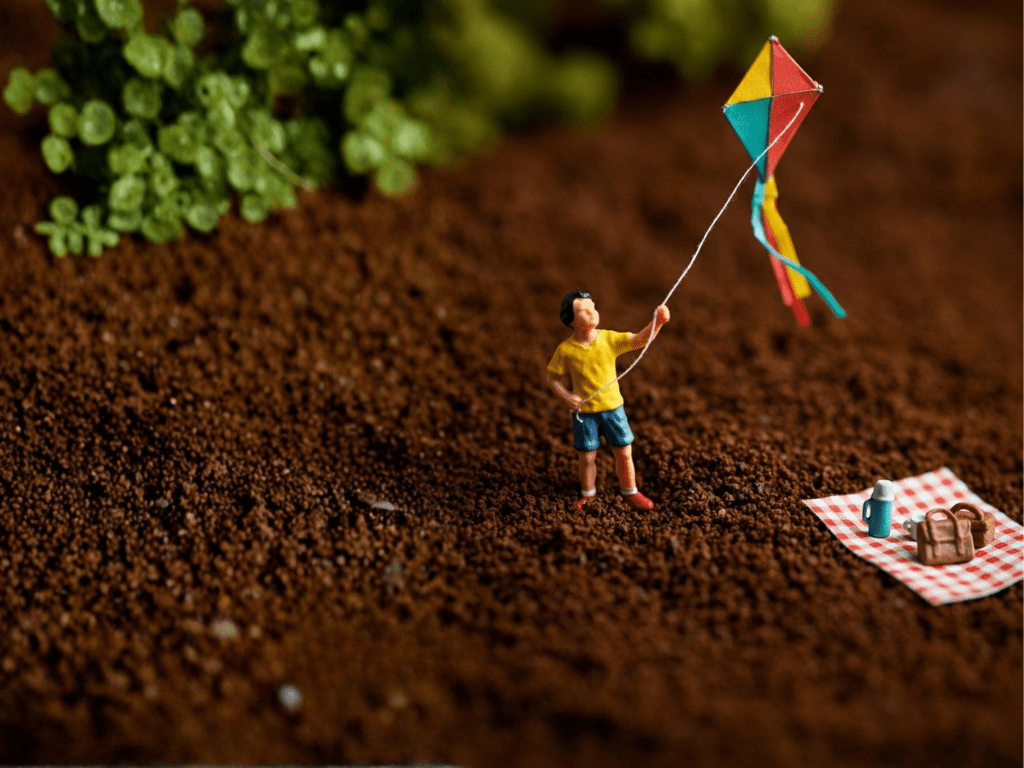
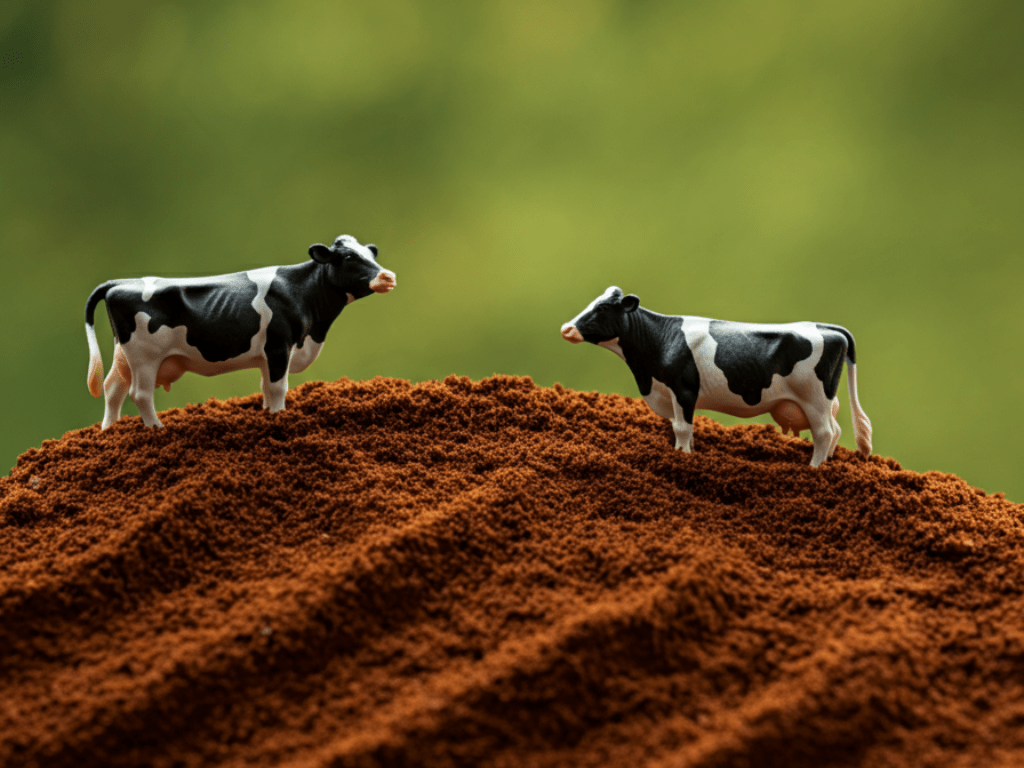
We built a distinctive, ownable brand world using miniature scenes and enamel mug imagery - rooted in familiar rituals, but reimagined in a way that stops you in your tracks.
Tiny figures. Real textures. Everyday moments, made strange enough to notice and warm enough to recognise.
This was a memory strategy.
In a category where products are almost identical and switching is encouraged, the brands that grow are the ones that come to mind first and feel easiest to choose.
Distinctive creative builds that mental availability over time, so the brand is already present before the decision is made.
The miniature world gave Owens something most specialty coffee brands lack: instant recognisability.
It made the brand visible in a category where everything looks the same. It made it memorable in a category built on novelty. And it made it easier to choose - because it was easier to remember.
The more distinctive the brand becomes, the less it has to rely on persuasion. Customers don’t need to be convinced. They already know who they are, and which coffee belongs in their hand.
Tiny figures. Real textures. Everyday moments, made strange enough to notice and warm enough to recognise.
This was a memory strategy.
In a category where products are almost identical and switching is encouraged, the brands that grow are the ones that come to mind first and feel easiest to choose.
Distinctive creative builds that mental availability over time, so the brand is already present before the decision is made.
The miniature world gave Owens something most specialty coffee brands lack: instant recognisability.
It made the brand visible in a category where everything looks the same. It made it memorable in a category built on novelty. And it made it easier to choose - because it was easier to remember.
The more distinctive the brand becomes, the less it has to rely on persuasion. Customers don’t need to be convinced. They already know who they are, and which coffee belongs in their hand.
05.
Becoming
A habit
We aligned each coffee to an existing moment in the day. The morning routine, the gym workout, the evening wind down, all already automatic, all already identity-linked, and all perfectly aligned to a single SKU that took the cognitive overwhelm of choice away.
You cannot engineer a habit from nothing. What you can do is find the behaviours already running in your customer's life and position your product as the thing that belongs inside those behaviours.
Cult
activation
We built Owens as a cult brand across the entire commercial system, not just the comms.
Pricing and margins were restructured, with a 36.3% improvement on core products creating the headroom to invest in growth without discounting to fund it.
Packaging, unboxing, and website UX were redesigned as a single integrated experience rather than separate assets. The discovery quiz - mapping 27 behavioural profiles across 10 SKUs - replaced a product grid that asked customers to decode coffee with one that asked them to recognise themselves, delivering a 17% quiz conversion rate against a category benchmark of around 5%.
The brand world followed. Owens' miniature-scene creative - small figures, real textures, everyday rituals made distinctive enough to notice and remember - gave the brand something most specialty coffee brands lack entirely: instant recognisability. Distinctive enough to stop a scroll. Warm enough to stay in memory. Delivered at a fraction of the cost of comparable category campaigns through AI-enabled creative direction, at two posts per day, at scale.
Sitewide conversion now sits in the top 10–20% globally. Cart abandonment is less than half the industry average. Instagram engagement is running at 13%. Organic website traffic is up 21%. Subscriber NPS is +86.8, with zero detractors. Subscription revenue grew 50% year on year and is now the primary growth driver.
When paid media was introduced into a brand system already built for retention, it scaled at 5.9x ROAS - profitable on first purchase. Marketing now returns £8.10 for every £1 invested. In Q1 2026, revenue grew 31% year on year.

Pricing and margins were restructured, with a 36.3% improvement on core products creating the headroom to invest in growth without discounting to fund it.
Packaging, unboxing, and website UX were redesigned as a single integrated experience rather than separate assets. The discovery quiz - mapping 27 behavioural profiles across 10 SKUs - replaced a product grid that asked customers to decode coffee with one that asked them to recognise themselves, delivering a 17% quiz conversion rate against a category benchmark of around 5%.
The brand world followed. Owens' miniature-scene creative - small figures, real textures, everyday rituals made distinctive enough to notice and remember - gave the brand something most specialty coffee brands lack entirely: instant recognisability. Distinctive enough to stop a scroll. Warm enough to stay in memory. Delivered at a fraction of the cost of comparable category campaigns through AI-enabled creative direction, at two posts per day, at scale.
Sitewide conversion now sits in the top 10–20% globally. Cart abandonment is less than half the industry average. Instagram engagement is running at 13%. Organic website traffic is up 21%. Subscriber NPS is +86.8, with zero detractors. Subscription revenue grew 50% year on year and is now the primary growth driver.
When paid media was introduced into a brand system already built for retention, it scaled at 5.9x ROAS - profitable on first purchase. Marketing now returns £8.10 for every £1 invested. In Q1 2026, revenue grew 31% year on year.
Results: +31% revenue. +50% subscription growth. 5.9x ROAS.
£8.10 return for every £1 invested.